How to do a shamanic journey
Are you ready to leave your body and explore the spiritual realms?
That is what happens in a shamanic journey.
You don’t need psychedelics. You don’t need years of training. You don’t need permission.
In this article, I explain how anyone can do a shamanic journey. I’ll also answer common questions about shamanic journeying and give you tips for improving your journeys.
Let’s get started!
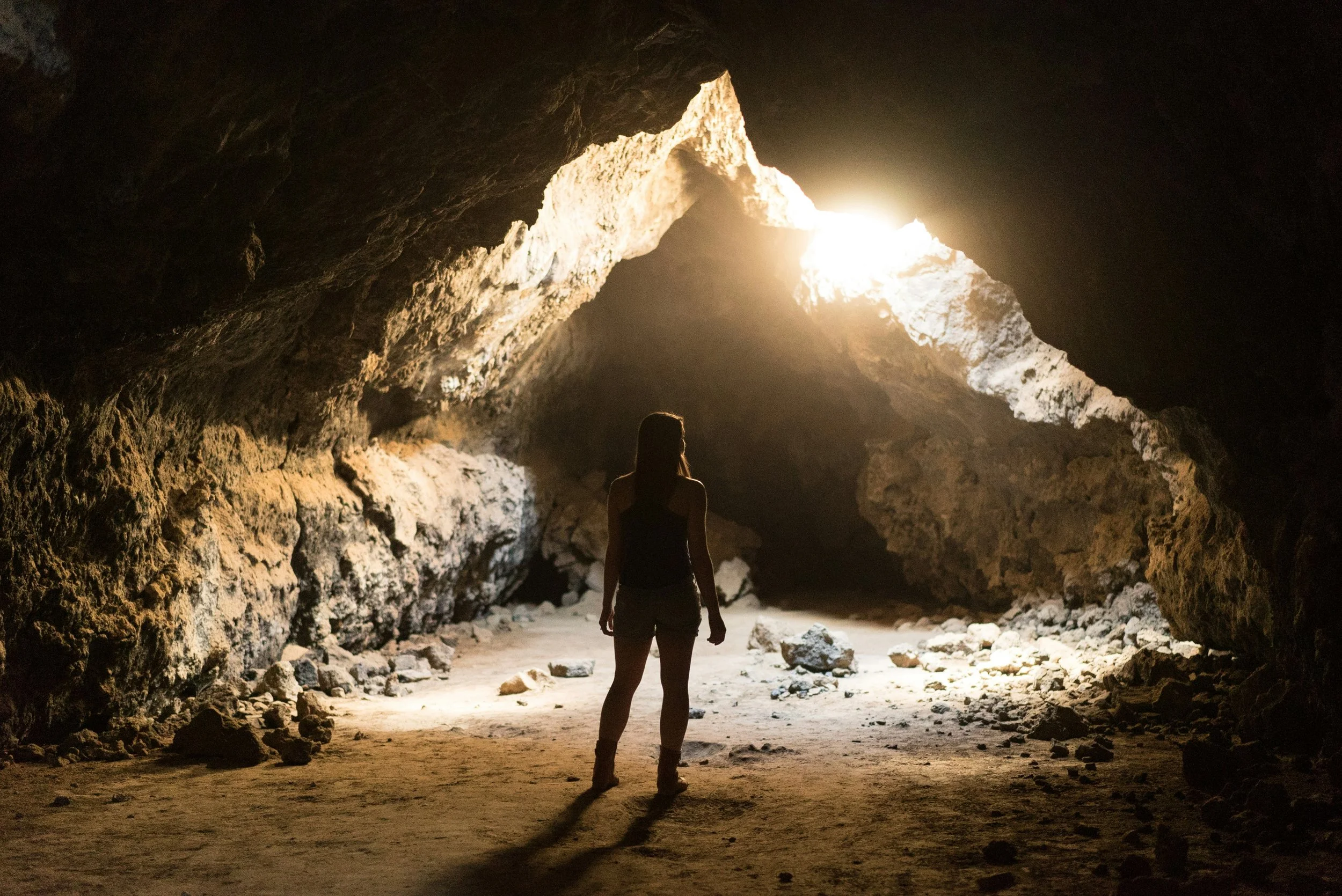
“Start your drumming. Picture a hole in the ground and enter it. Have fun!”
That was the full instruction I received before my first shamanic journey.
While I do NOT recommend you start with so little guidance, I can say that it worked. I played a shamanic drumming audio track on my phone, pictured a hole in the ground, imagined entering it…and then had a shamanic experience.
I share this to call out that shamanic journeying can be simple, easy and accessible to anyone, even if you’re not an expert in shamanism.
Some people have a profound experience on their first journey. Some people experience nothing and need more practice. My first shamanic journey was stumbling and confusing, but intriguing enough that I tried again. Then again.
Don't make a big deal about "succeeding" or "failing" on your first go round. Like any new skill, it takes practice. Everyone's path is different. What’s most important is that you feel comfortable, safe, curious and begin from a place of openness.
What actually happens in a shamanic journey?
In a shamanic journey, part of your soul leaves your body and travels through the spiritual realms. The physical world we live in is sometimes referred to as “ordinary reality” and the spiritual realms are called “non-ordinary reality” — terms coined by anthropologist-author Carlos Castaneda.
As shamanic cultures around the world have known for thousands of years, non-ordinary reality can be divided into three areas or levels:
The Lower World is a pristine, nature-based realm. It’s called the “Lower World” because it is typically visited by descending. This is a safe place filled with trustworthy and compassionate helping spirits.
The Middle World is the spiritual side of our physical, everyday reality. And just like our world, it is a mixed-bag of helpful, neutral, confused, selfish and dangerous beings.
The Upper World is an ethereal, spacious realm. It’s called the “Upper World” because it is typically visited by ascending. This is a safe place filled with trustworthy and compassionate helping spirits.
Different shamanic traditions place different emphasis on one or more of these levels. In a shamanic journey, you’ll visit at least one. You can find more about the three realms here.
For beginners, I strongly recommend you focus on journeying to the Lower World because it is safe and because many beginners find the Lower World the most accessible.

Spirits you meet in the Lower World are trustworthy and compassionate
How to prepare for a shamanic journey
You’ll need the following things to do a shamanic journey:
A quiet, comfortable place where you can sit or lie down, preferably with the lights darkened.
A shamanic journey audio track. Here’s a good shamanic drumming track on Spotify and YouTube.
A blindfold (optional but really useful, especially for beginners).
Headphones (optional but handy if there is ambient noise).
That’s it!
Some shamanic practitioners teach themselves how to drum or rattle for themselves while journeying, but this is optional and not necessary for beginners.
How to do a shamanic journey
Step 1: Set your intention
Before you begin, it’s important to set the intention for your shamanic journey. Being clear on your goal for the journey is important. Your intention is like a magnet pulling you to your astral destination.
The intention I recommend for a first journey is: "I'm going to journey to Lower World and explore what I find there.”
You might want to repeat your intention to yourself a few times, even write it on a piece of paper in your pocket.
Step 2: Get ready
Settle into your comfortable spot. Take a few slow breaths to relax your body, then start your audio drumming track. You'll hear steady, rhythmic drumming. Close your eyes and put on your blindfold if you have one.
Step 3: Visualize your starting point
All journeys begin by visualizing a place in nature in ordinary reality. Ideally this is someplace wild and that you have an affinity with. The most common starting points are caves, bodies of water or large trees.
For a Lower World journey, your journey will begin by going down through that cave, going down the roots of that tree or going down through the bottom of that body of water. There is no right or wrong starting point. You might need to experiment with different starting points to find the one that resonates with you the most.
Step 4: Descend to the Lower World
Let the journey begin!
Start by picturing yourself descending through your starting point. In the beginning, this is you imagining that this is happening, like a creative visualization. For example: I see and feel the tree. I am climbing into the tree. I see the roots reaching down into the ground. I am sliding down the roots. Down, down, down, very deep into earth and darkness. And so on.
After a certain point, you’ll find that the experience stops being a self-guided visualization and starts being a spirit-led experience. Sometimes this shift is subtle, but a common marker is when unexpected things begin to occur.
How long and far you descend varies. Everyone is different. There is no right or wrong. With practice, the time required to descend to the Lower World will shrink.
As you descend, you may feel like you pass through a barrier or membrane along the way. This is the normal division between Middle World and Lower World, but not everyone feels it on every journey.
Step 5: Enter the Lower World
Keep descending until you reach the end. You'll know it's the end because the feeling will shift.
You may see light or feel an openness or welcoming. Move into this. This should be Lower World. For example: After descending down in the cave, in the dark, deeper and deeper, I come to the end of the cave. I see light and emerge into a new land.
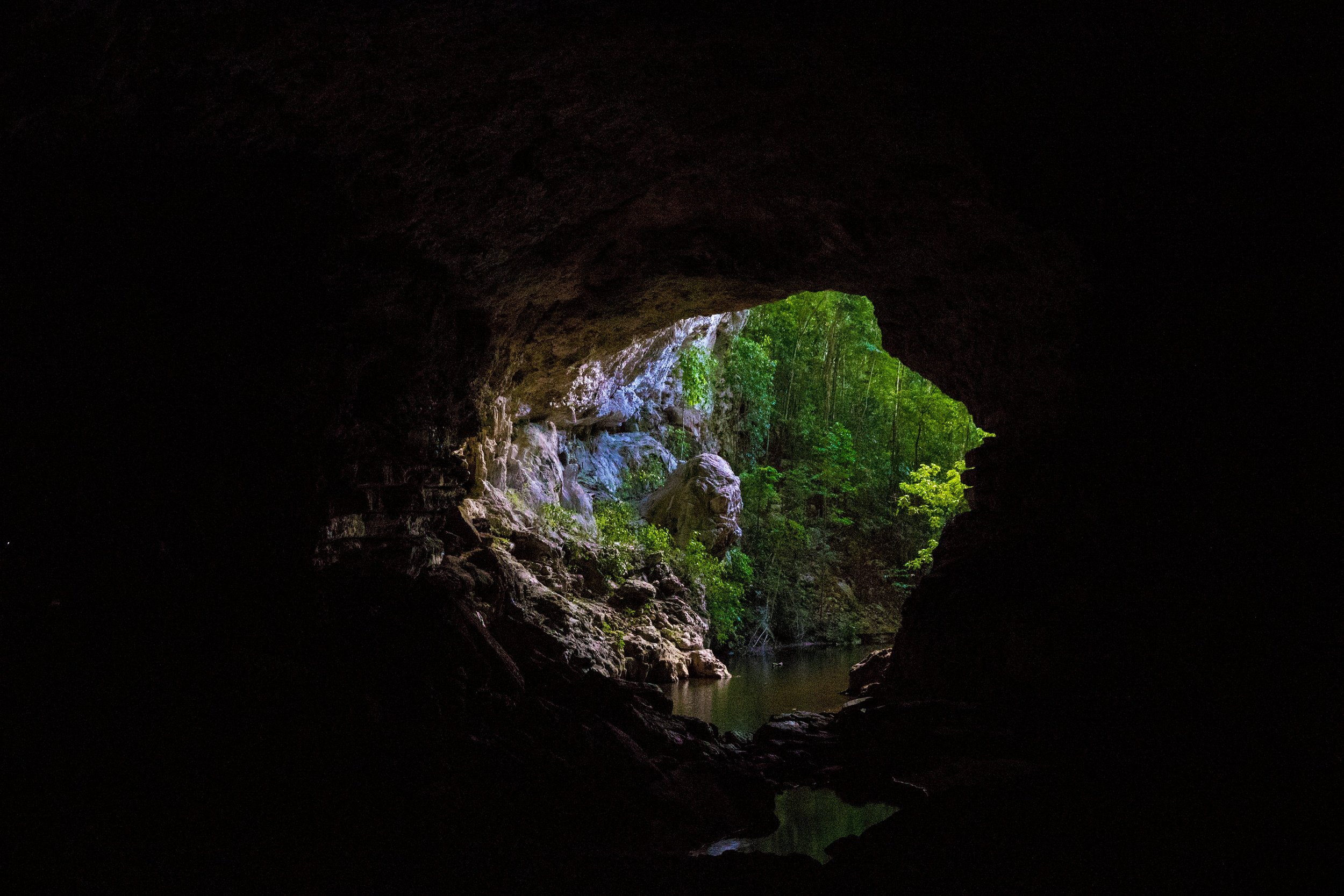
You could enter the Lower World in any biome
One of the skills a shamanic journeyer must master is learning how to distinguish between Lower World, Middle World and Upper World. And because everyone experiences non-ordinary reality differently, you’ll need to experiment and experience how those realms differ for you.
Step 6: Explore the Lower World
Now that you’re here, what do you notice? As you explore, check in with all of your senses – as well as your heart.
You may encounter other spirits in the Lower World. They often take the form of animals, but this isn’t always the case. Remember that Lower World is a safe place full of compassionate, trustworthy beings. If you do meet a spirit in Lower World, you can ask it to teach you something about shamanic journeying.
Step 7: The Callback
At the end of the most shamanic drumming tracks, you'll hear what's known as the callback. The steady drumming will pause. There will be a short set of slower, louder beats. Then about a minute of very rapid drumming.
This is your sign that the track is nearly over and it's time to return to your body. Just retrace your steps, going back the way you came. This may happen much faster than your trip out. When you get back to your starting point, bring your attention back to your body. Breathe. Feel the weight and physicality of your body. Welcome back to ordinary reality.
You may want to take notes or journal about your experiences.
Common questions about shamanic journeying
Here are quick answers to a few of the most common questions people have about shamanic journeys.
“How do I know I’m not just making this up?”
These days, many people are very skeptical, empirical and rational. If you’re like me, you weren’t raised in a family or culture that paid much, if any, attention to things that were mystical, spiritual or outside the day-to-day hustle.
Shamans refer to seeing and knowing things with their heart. This isn’t a colorful expression. Nor is it about faith. As part of their training, shamans discover how to engage with the world with their heart, not just with their ego-centric head. And part of that heart-knowing is being able to tell the difference between genuine shamanic journeys and imagination.
It’s normal to have doubts when you’re first beginning. Most shamanic practitioners overcome these doubts because:
The experiences they have on shamanic journeys become too complex, surprising and unique to all be just imagination
They experience synchronicities in ordinary reality that reinforce what they’ve done and learned while journeying
The results speak for themselves — the advice and healing they receive in journeys is too great to ignore

Stumbling across a representation of a spirit from your journey is a common synchronicity
“I couldn’t do it. What went wrong?”
There are many reasons why you may have difficulty journeying on a given day. Some common issues which can interfere with your journeys include:
Fatigue: If you’re really tired, you may have trouble focusing on the journey or fall asleep midway. Give yourself the rest you need and try again another day.
Alcohol or drugs: Substances which diminish your focus can make it harder to journey, even if you had them a day or two before. It’s best to avoid alcohol and drugs while journeying.
Stress: Anxiety can also make it difficult to settle and focus on a journey. Part of doing a shamanic journey is leaving your everyday thoughts behind, but if you’re too worried about something in your life to set it aside for a moment, this can keep you from journeying. If this is the case, take time to fully relax. You may need to spend more time relaxing upfront than you actually do journeying.
High expectations: If you go into a journey expecting a profound mystical experience, you’re putting unnecessary pressure on yourself. Some journeys are indeed profound. Some are simple. Some are confusing. You’ll find journeying is easier when you don’t sweat the outcome of your journey. Trust that you’ll get the experience you need at that time, even if it feels like nothing.
Time of day: Some people find it easier to journey in the morning. Some late at night after everyone else is asleep. Experiment to find what works best for you.
Your drumming or rattling track: There are many different shamanic drumming and shamanic rattling tracks available online. Some people prefer drumming, some prefer rattling. Experiment with different tracks to find the instrument, sound, speed and style that works best for you.
“I didn’t see anything on my journey.”
That’s OK. Everyone experiences the spiritual realms differently. It’s true that some shamanic practitioners have very visual journeys, almost like watching a very-engrossing 3-D movie. These journeys often get shared in writings about journeys because they’re easier to document and understand.
However, many shamanic practitioners experience their journeys via hearing, touch, smell, taste, or just an intuitive understanding of what’s happening. These are all legitimate ways to experience a shamanic journey.
Another skill that a shamanic practitioner must develop is understanding and strengthening their senses during a journey.
If you feel like nothing happened, try again. But this time pay close attention to all of your senses – including your intuition.
“Can I get lost on a journey?”
No. If at any point you get stuck or confused or scared — don't panic. You can always just go back the way you came and start over.
Next steps
Now it’s your turn! You can use the steps above to take your own shamanic journey. If you do, let me know how it goes!
If you’d like personal coaching and support, schedule a session with me here.